
Ask your distributor for current extended production schedule.
For elite travel club directors, uniforms are not a side task. They are an operational test. If you run multiple rosters from 12U through 18U, you already know the pain points: one team’s jerseys arrive late, another roster’s colors are off from last season, and a “great deal” from a broker turns into a week of chasing proofs, tracking numbers, and missing player names.
That is why choosing the right partner for custom 7v7 uniforms is less about picking a cool mockup and more about evaluating manufacturing discipline. A reliable supplier should help your program move fast, stay cohesive across age groups, and avoid the second time around scramble that happens when a vendor cannot handle reorders, replacements, or bulk roster complexity.
This checklist is built for travel football directors who need more than a basic jersey printer. If your organization fields multiple teams, attends major events, and cares about a professional look from the first pool game to the championship bracket, here is how to review a 7v7 jersey maker before you place a large order.
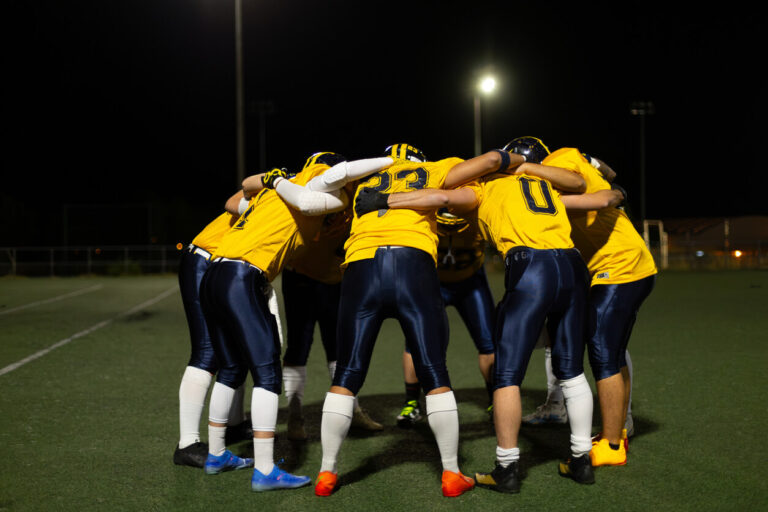
A lot of companies can make a slick digital mockup. Far fewer can actually produce 7v7 uniforms at scale without blowing up your timeline. That matters when you are managing multiple age groups, duplicate number conflicts, coaching approvals, and late roster adds.
Ask a simple question early: are they a true custom manufacturer, or are they acting like a middleman? Many low-tier brokers are basically sales shops. They collect your order, send it elsewhere, and hope the production partner delivers. That setup often creates blind spots around quality control, shipping windows, and accountability when something goes wrong.
For large travel programs, capacity is not a nice bonus. It is the backbone of the relationship. You need a vendor that can handle full football uniforms, training gear, bags, and roster-specific updates without treating your club like a one-off order.
Directors who have been burned by delays tend to ask about lead times. The smarter move is to ask about guarantees.
There is a big difference between “our average turnaround is three to four weeks” and “your order will be produced within a defined window.” One is marketing language. The other is a commitment you can plan around when booking tournaments, media days, and sponsor rollouts.
A reliable 7v7 jersey maker should be able to explain exactly when production starts, what approvals are needed, and what happens if the timeline slips. If the answers sound vague, or if the sales rep keeps saying “it depends,” that is usually your answer.
For club directors, time is not abstract. A missed ship date means players borrowing old jerseys, coaches fielding parent texts, and your brand looking disorganized at the exact moment you want to stand out. That is why dependable custom football jerseys should come from a company built around repeatable production, not guesswork.
One of the biggest headaches in travel football is color drift across seasons and roster levels. Maybe your 15U team’s black has a charcoal cast. Maybe the red on your 18U set runs warmer than the 14U set. Maybe the logo placement shifts just enough that your sideline photos look pieced together.
If your club is building a recognizable brand, this is not a cosmetic complaint. It affects your team’s identity. A serious uniform partner should have a process for maintaining cohesive colors, logos, fonts, and print placement across repeat orders and future expansions.
Ask whether they save production-ready art files, color standards, and previous order specs. Ask how they match old orders when you need a second time reorder midseason. Ask whether they can support a multi-year visual system so every team in your program looks related, not random.
That consistency is one of the reasons many directors move away from local printers and toward specialized manufacturers. A retail print shop might do fine on spirit wear. It is rarely built to maintain cohesive technical football uniforms across years of competitive growth.
Travel football directors should be skeptical of any vendor that talks mostly about graphics and barely mentions fabric. In 7 football, the jersey has to do more than look sharp in a photo. It has to survive heat, repeated washing, tournament weekends, and constant movement.
The basics matter. Your 7v7 uniforms should use lightweight, breathable, performance-focused materials that allow players to move freely on the field. The best custom jerseys for this environment are built from premium fabrics that manage heat and hold shape instead of getting heavy or loose by game three.
If you want a deeper breakdown of material choices, this guide to sports uniform fabrics and jersey performance is a useful place to compare what actually works for competitive play.
This is also where local t-shirt printers often fail. They may offer polyester, but not the kind of athletic construction needed for repeated football use. A shirt that feels fine at a retail counter can become a sticky, boxy mess once a player starts cutting, sprinting, and changing direction in summer heat.
A perfect fit in 7 football is not about fashion. It is about movement, comfort, and confidence. Jerseys that pull across the shoulders, hang too long, or fit like repurposed promo tees do not perform well and do not create the professional look players expect.
Ask the vendor how they size their 7v7 uniforms across youth and high school levels. Do they have a real size run? Can they support different body types within one roster? Do they provide guidance for compression preferences, looser cuts, or position-based fit concerns?
When directors skip this review, they often pay for it the second time they order. Suddenly there are exchanges, unhappy families, and inconsistent silhouettes across the team. A good maker should help you avoid that by giving clear sizing support before production begins.
A single all-star team is one thing. A travel organization with 12U, 14U, 15U, 16U, 17U, and 18U rosters is another animal entirely.
That is where operational detail starts separating professional suppliers from hobby-level shops. Your vendor should have a reliable system for collecting player names, sizes, and numbers, flagging duplicate numbers, and organizing roster data by age group and team. If they do not have a clean process, your staff ends up doing quality control for them.
This matters even more when your club is carrying alternates, adding players late, or trying to keep a cohesive look across home and away sets. Strong order management means fewer mistakes and faster answers when your staff has questions.
If you are comparing options, it also helps to read through what coaches should know before ordering 7-on-7 gear, especially if your program is balancing reversible and traditional jerseys.
Most directors ask about the first order. Experienced directors ask about the second time.
Why? Because the real test of a jersey maker is what happens after launch. Players get added. Sizes change. A jersey gets lost. A standout 13U roster becomes a 14U roster next year and wants the same design with slight updates. If the company cannot support small replacement runs or streamlined reorders, your original “deal” gets expensive fast.
A reliable partner should be able to explain how reorders work, what the minimums are, and how quickly they can reproduce prior uniforms with matching colors, numbers, and logos. That continuity is especially important for clubs trying to build a recognizable, professional brand over time.
Large travel organizations should not shop like individual teams. If you run multiple rosters, you need pricing that reflects program scale.
That means asking about bulk roster discounts, tiered volume pricing, and whether the vendor can quote your organization as a whole instead of splitting every team into separate small orders. A manufacturer that understands club structure will often offer more strategic pricing than a retail-facing shop that treats each roster like a standalone transaction.
Do not stop at the jersey price either. Review the full package: shorts, shooter shirts, warm-up tops, bags, and accessories. Sometimes the best value is not the cheapest base jersey. It is the supplier that can offer a coordinated package with better production reliability and fewer hidden costs.
This is where specialized custom uniforms often beat pieced-together local solutions. Buying from three vendors may look cheaper on paper, but it usually creates more admin work, more shipping variables, and a less cohesive final result.
A strong design is important, but the process behind it matters more for big clubs. You need a vendor that can move from concept to proof to final approval without getting bogged down in endless revisions or unclear communication.
Ask how quickly they can turn around artwork. Ask who handles edits. Ask whether they can adapt one design system across multiple age groups while preserving your team’s identity. Good suppliers know how to make a program look unified while still giving each roster enough distinction to feel special.
That balance matters in travel football. You want a professional look that players love, but you also want a design system that can scale. If every team has a totally unrelated visual concept, your club brand starts to fracture.
For ideas on building a cleaner, more scalable visual system, this article on designing sports uniforms that stand out can help frame the conversation with your supplier.
There is nothing wrong with a local print shop doing fan tees, booster gear, or event shirts. The problem starts when directors ask that same shop to produce high-level 7v7 uniforms and expect the same result as a specialized athletic manufacturer.
Retail t-shirt printers usually optimize for simple sales, not technical performance apparel. Their strengths are often screen printing, fast storefront orders, and basic garment decoration. That does not automatically translate to lightweight football uniforms, sublimated logos, long-term color matching, roster-specific numbers, or repeat orders that need to look identical a year later.
This is where many clubs lose time and money. The first order may seem easy. Then the second time around, the blanks are discontinued, colors are off, or the printer cannot match the original design. Your team ends up with a half-updated look that feels stitched together.
When you review a potential supplier, keep the conversation practical. Ask questions that reveal how they actually work.
What is your guaranteed production window? How do you handle bulk roster orders? Can you maintain color consistency across future orders? What premium fabrics do you use for 7 football? What happens if we need one replacement jersey six months later? Can you support bags and accessories with the same branding system?
The quality of the answers tells you a lot. Strong vendors answer clearly and confidently. Weak ones dodge, generalize, or rely on the sales pitch. If you have to work hard to get basic operational answers before the sale, expect an even rougher experience after payment.
A dependable maker of custom football jerseys should make your job lighter, not heavier. They should help your club get started quickly, review your rosters carefully, and keep the process organized from proof to delivery. They should understand that your uniforms are not just apparel. They are part of your recruiting image, your social content, your sponsor presentation, and your player experience.
The right supplier also knows that elite travel programs need more than one clean drop. They need repeatability. They need a second time reorder process that does not fall apart. They need football uniforms that perform, hold their colors, and keep a professional look across age groups and seasons.
That is where specialized manufacturers separate themselves. They are built to handle volume, maintain standards, and offer the kind of direct support large clubs actually need.
Before you place your next order, review whether the supplier can do the following:
If a vendor cannot check most of those boxes, keep looking.
If your club is tired of late shipments, mismatched colors, and vendors that talk big but cannot execute, it may be time to work with a specialized partner. Full Gorilla is built for programs that need custom 7v7 uniforms, custom football jerseys, and full team packages produced with speed, consistency, and serious attention to detail.
For travel club directors managing multiple rosters, the next step is simple: request direct wholesale pricing sheets and review your options with a supplier that understands scale. When your team enters the field, your uniforms should feel ready, cohesive, and built to perform, not like a last-minute patch job.