
Ask your distributor for current extended production schedule.
Athletic Directors, Program Coordinators, and League Purchasing Agents are under constant pressure to do more with fixed budgets, tighter timelines, and higher expectations from coaches, athletes, and administrators. When you are sourcing bulk team apparel, the decision is not just about uniforms, it is about protecting budget dollars, selecting a dependable vendor, keeping branding consistent across programs, and simplifying a purchasing process that can easily become chaotic.
For schools, leagues, and multi-team organizations, apparel procurement behaves a lot like facility planning: if the foundation is weak, every season exposes the cracks. A missed production window disrupts media days and opening games. Inconsistent colors make a department look fragmented. Low-grade materials turn a “cost-saving” order into a replacement problem by midseason. This guide is built to help institutional buyers evaluate bulk apparel strategically, so every order supports performance, presentation, and long-term value.
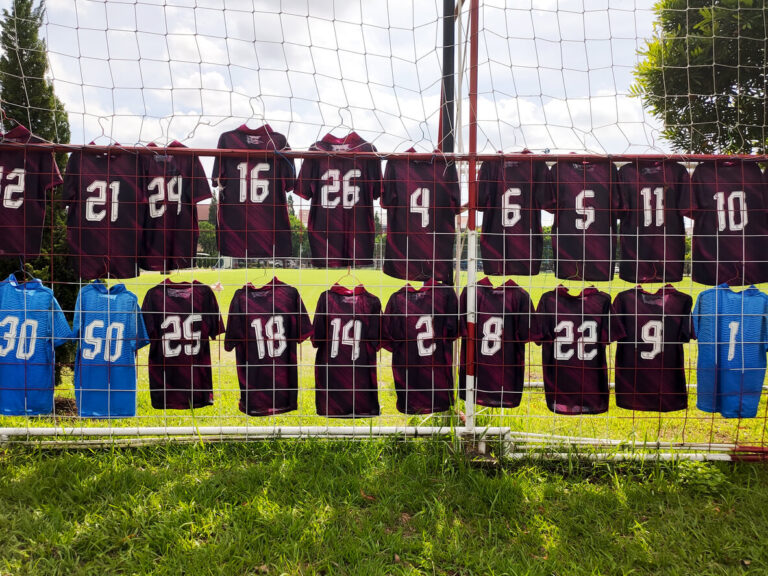
Bulk apparel purchasing is not a retail transaction scaled up. It is an institutional procurement exercise with multiple stakeholders, approval layers, compliance details, and operational consequences. An athletic director may be balancing varsity, JV, feeder programs, spirit wear, coaching apparel, and travel gear all within the same seasonal budget cycle. That means the right vendor must function less like a seller and more like a procurement partner.
The strongest bulk ordering programs start with centralized planning. Instead of each coach sourcing pieces independently, leading departments create a coordinated apparel framework that covers competitive uniforms, warm-ups, sideline apparel, bags, and replacement policies. This approach improves leverage on pricing, reduces artwork inconsistencies, and prevents the all-too-common situation where one team is polished while another looks like it ordered from a different institution.
A reliable supplier should also understand the realities of athletic administration: roster volatility, booster involvement, board approvals, tax-exempt documentation, and the need for reorders long after the initial order ships. If a vendor cannot support that environment, the burden falls back on your office.
For departments looking to centralize ordering across sports, start by reviewing available Custom Team Uniforms and identifying where one vendor can support multiple categories under a single program strategy.
Institutional buying often fails in the administrative details, not the product selection. A vendor may offer attractive artwork and competitive pricing, but if they cannot work cleanly with purchase orders, tax exemptions, and budget release timelines, the process slows down at exactly the wrong moment.
Purchase orders are often the backbone of school and league procurement. Athletic departments should confirm early whether a vendor accepts PO-based workflows, what documentation is required to initiate production, and whether deposits are needed before artwork approval or after final roster confirmation. The more clearly these milestones are defined, the less likely your order is to stall between athletics, finance, and vendor production.
Tax exemption handling is another critical checkpoint. Public schools, many private institutions, and nonprofit leagues frequently require tax-exempt billing, but that status only helps if paperwork is processed correctly before invoicing. A good vendor should know how to collect certificates, apply exemption status accurately, and prevent invoicing errors that force accounting teams to rework approvals.
Budget cycles matter just as much. Many athletic departments are ordering against fiscal-year allocations, seasonal fundraising revenue, or booster commitments that do not all arrive on the same schedule. This is where planning separates disciplined programs from reactive ones. If football orders consume the entire early-year production window, winter and spring sports may end up rushed or fragmented. Institutional buyers should map ordering around:
The best apparel partners will help you stage orders around these constraints rather than forcing you into a one-size-fits-all timeline. That matters when one sport has finalized numbers in June while another will not settle its roster until late October.
Departments that need a centralized catalog for multiple categories can reduce administrative friction by consolidating through Bulk Custom Jerseys and related team apparel under one supplier relationship instead of managing separate vendors for each sport.
Brand consistency is not a cosmetic issue. It is an institutional credibility issue. When football navy does not match basketball navy, when softball uses an outdated logo, or when warm-ups feature a different type treatment than game jerseys, the department starts to look decentralized and unmanaged. For schools investing in reputation, recruiting, fundraising, and community visibility, that inconsistency carries a real cost.
Athletic directors should treat apparel branding the same way universities treat visual identity standards. Every team should work from a shared asset library that includes approved logos, alternate marks, placement rules, and exact color standards. Pantone matching is especially important when multiple sports are ordering from different garment types and fabric constructions. Without a defined color standard, “close enough” becomes the default, and that is how departments drift over time.
A practical brand system for athletics should include:
This matters across every category, not just game-day uniforms. Hoodies, quarter-zips, shooter shirts, warm-up tops, backpacks, and duffel bags all contribute to the department’s public-facing image. A coordinated visual identity turns a group of teams into a recognizable athletic program.
When evaluating a supplier, ask whether their design team can maintain consistency across sports while adjusting for sport-specific performance needs. A wrestling singlet, basketball reversible, football jersey, and track warm-up all require different construction logic, but they should still look like they belong to the same institution.
That is where a centralized Custom Team Uniforms strategy becomes valuable. Instead of rebuilding artwork from scratch each season, departments can establish a repeatable design language and carry it through football, basketball, girls flag football, warm-ups, and bags with far less administrative effort.
Bulk pricing is often discussed too narrowly. The real question is not whether a vendor offers a discount at 25, 50, or 100 units. The real question is whether the pricing structure supports an entire department over time.
For athletic directors, value comes from understanding how apparel categories stack together. Jerseys, pants, hoodies, shooting shirts, practice gear, and sideline apparel should not be evaluated in isolation. A vendor with slightly higher per-piece pricing may still offer better total value if they provide stronger quality, lower replacement friction, and a more efficient reorder process for future athletes.
Buyers should ask vendors to explain their pricing tiers clearly. Useful pricing conversations include:
This last point is often overlooked. Institutional buyers rarely need only one large order. They need an initial issue, then a reliable replacement path for transfers, late additions, number changes, and athlete turnover. If a vendor requires large reorder minimums, your original “bulk savings” can evaporate quickly.
A strong department-level apparel strategy often looks like this: one coordinated initial order for key sports, one design standard across teams, and one vendor capable of handling low-friction replenishment. That model reduces waste, lowers emergency spend, and gives administrators cleaner forecasting from season to season.
If you are sourcing for multiple teams at once, compare Bulk Custom Jerseys alongside warm-ups and bags to see whether a single supplier can create better aggregate value than a patchwork of independent orders.
Athletic departments should not have to chase separate mockups, formatting rules, and sizing spreadsheets for every coach in the building. Full Gorilla can support department-wide design mockups, standardized branding, and sizing templates that make it easier to organize apparel orders across multiple sports programs without rebuilding the process each season.
For schools and leagues managing football, basketball, girls flag football, warm-ups, and team bags under one purchasing umbrella, centralized design support can reduce approval cycles and prevent costly artwork inconsistencies before production begins.
Request a Custom Program Mockup
In bulk apparel procurement, low quality is rarely obvious on the quote sheet. It shows up later, after repeated washes, after road trips, after helmets and pads rub against seams, after industrial laundering strips out weak decoration, and after athletes put the same garment through a full season of punishment.
That is why quality control should be evaluated through a durability lens, not just a visual one. Athletic directors should ask direct questions about fabric weight, gauge, stretch recovery, seam construction, reinforcement points, and colorfastness. A jersey that looks sharp in a digital mockup but fails under game conditions is not a budget solution. It is deferred replacement expense.
High-gauge, durable fabrics matter because institutional apparel lives a harder life than consumer activewear. School-issued gear is shared, washed aggressively, packed tightly, and worn repeatedly. Competitive uniforms must hold shape, resist pilling, and keep colors vibrant across a long season. Warm-ups and hoodies need enough structure to survive daily use without looking tired by midyear.
When reviewing vendors, focus on these quality indicators:
Industrial laundering is a particularly important issue for institutions. Even if your program does not use a formal industrial laundry service, team gear often gets washed at scale under harsher conditions than household apparel. That means construction quality has to be strong enough to absorb repeated cycles without seam distortion, edge curling, or graphic degradation.
The strongest vendors stand behind their work in a meaningful way. Warranty language, replacement flexibility, and production guarantees all signal how much confidence a manufacturer has in its own process. For institutional buyers, those safeguards are not marketing extras. They are risk management tools.
Departments that need apparel built for repeated use across seasons should prioritize Custom Team Uniforms from suppliers that can document both construction quality and reorder reliability.
One of the biggest hidden costs in athletic apparel purchasing is internal disorder. When each coach submits information differently, uses different naming conventions, or delays roster confirmation, the athletic office becomes a traffic controller for preventable problems. Standardization is the antidote.
Create a department-wide ordering framework that every coach follows. This should include roster submission deadlines, required sizing templates, approved logo files, number assignment procedures, and one point of contact for final approvals. The goal is not bureaucracy for its own sake. The goal is to prevent mistakes that lead to rush charges, incorrect decoration, and fragmented production schedules.
A well-run process usually includes:
This kind of structure becomes even more important in districts, club networks, and leagues where multiple programs may be ordering simultaneously. The more variables you remove before production, the cleaner the result.
A polished presentation is not enough. Institutional buyers need answers that reveal whether a vendor can support real-world athletic operations. Before signing off on a large apparel order, ask questions that test process strength, not just product appeal.
Start with operational reliability. Can the vendor provide a realistic and documented production timeline? Do they support one-off replacements after the initial order? Can they maintain design consistency across sports and future seasons? Do they have a clear approval process for artwork, rosters, and final quantities?
Then move into procurement compatibility. Ask whether they accept purchase orders, how they handle tax-exempt billing, what happens if roster changes occur late in the process, and whether they can package orders by team or athlete. If the answers are vague, that is usually a sign that your office will be doing extra work later.
Finally, assess long-term fit. The right partner should be able to grow with your department, not just fill one order. If your school plans to standardize branding, add new sports, or centralize team bags and warm-ups, your supplier should be equipped to support that broader strategy.
Athletic apparel is one of the most visible expressions of how a program operates. When uniforms fit well, colors match, coaches receive gear on time, and replacement orders are simple, the department looks organized and credible. That impression matters to athletes, parents, boosters, administrators, and prospective families.
The right vendor relationship should reduce administrative burden while improving quality, consistency, and cost predictability. For many institutions, that means finding a supplier capable of handling custom uniforms, warm-ups, and bags with dependable timelines and a design process built for multi-team environments.
Full Gorilla’s model aligns well with departments that need speed, custom design support, and long-term reorder flexibility. For athletic programs trying to stretch budgets without sacrificing presentation, that combination can be the difference between a one-season fix and a sustainable apparel program.
If you are planning apparel procurement for an upcoming season, now is the time to organize rosters, align branding standards, and secure production capacity before demand peaks. Full Gorilla works with schools, leagues, and athletic departments that need a dependable partner for department-wide apparel planning, custom design execution, and streamlined ordering.
Whether you are sourcing game uniforms, warm-ups, or travel gear across multiple teams, a program-level conversation now can prevent rushed approvals and budget inefficiencies later.